



Adenosine Receptor
P1 receptor
Adenosine receptors (ARs) comprise a group of G protein-coupled receptors (GPCR) which mediate the physiological actions of adenosine. To date, four AR subtypes have been cloned and identified in different tissues. These receptors have distinct localization, signal transduction pathways and different means of regulation upon exposure to agonists. A key property of some of Adenosine receptors is their ability to serve as sensors of cellular oxidative stress, which is transmitted by transcription factors, such as NF-κB, to regulate the expression of ARs. The importance of Adenosine receptors in the regulation of normal and pathological processes such as sleep, the development of cancers and in protection against hearing loss will be examined.
Adenosine Receptor Isoform Specific Products
All Product Categories
-
Adenosine Receptor Inhibitors
(41)
View all products
-
Adenosine Receptor Agonists
(119)
View all products
-
Adenosine Receptor Antagonists
(203)
View all products
-
Adenosine Receptor Activators
(9)
View all products
-
Adenosine Receptor Modulators
(11)
View all products
-
Adenosine Receptor Degrader
(1)
View all products
-
Adenosine Receptor Ligands
(13)
View all products
-
Adenosine Receptor Related Products (428)
Related Products (428)

-
Antibodies (2)
-
Adenosine Receptor Isoform Comparison
-
YT 146
 0 ImagesYT 146 is a potent agonist of A2 adenosine receptor (A2 AR) agonist. YT 146 causes a concentreation dependent cAMP accumulation, with the EC50 of 1.5 nM. YT 146 has cardioprotective effects.
-
Neladenoson
 0 ImagesNeladenoson is a potent and selective Adenosine A1 Receptor agonist. Neladenoson is promising for research of heart failure.
-
LAS101057
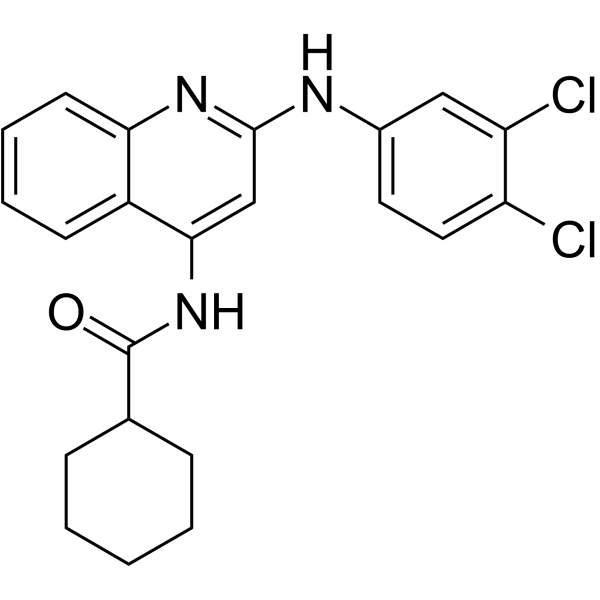
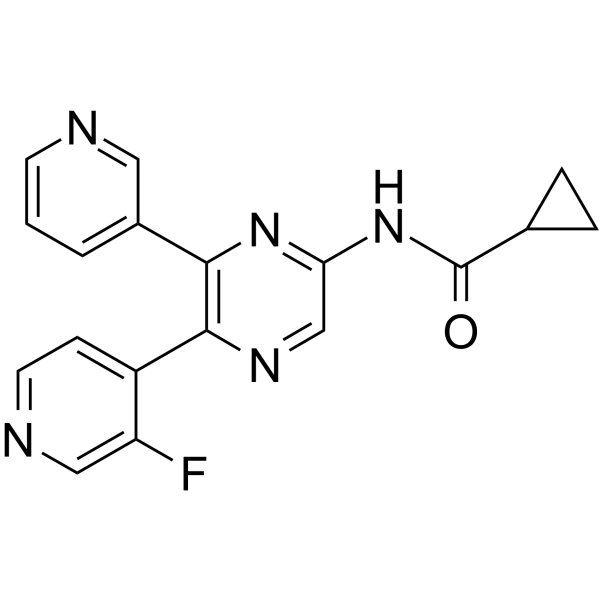 0 ImagesLAS101057 is a potent, selective, and orally efficacious A2B receptor antagonist.
-
ABT-702 hydrochloride
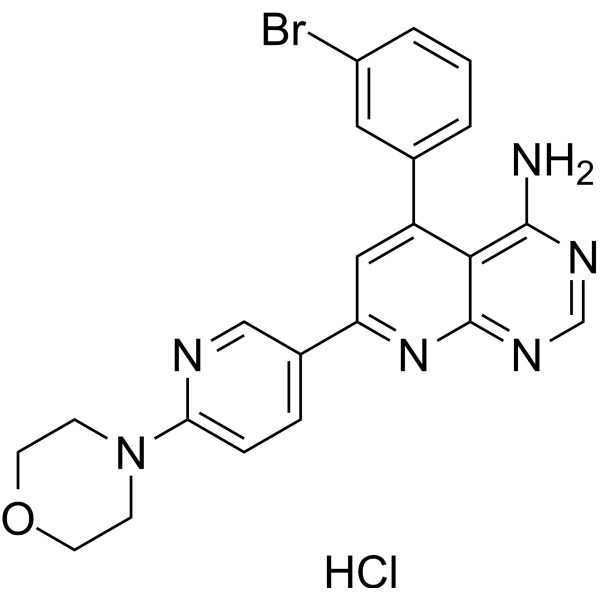 0 ImagesABT-702 hydrochloride is a potent, orally active, and selective adenosine kinase (AK) inhibitor with an IC50 of 1.7 nM. ABT-702 hydrochloride shows >1300-fold selectivity for AK over other biological targets, including cyclooxygenases-1 and -2. ABT-702 hydrochloride attenuates inflammation in diabetic retinopathy by increasing free adenosine levels. ABT-702 hydrochloride shows analgesic and anti-inflammatory effects in vivo. ABT-702 hydrochloride can be used for diabetic retinopathy research.
-
Adenosine monophosphate-15N5,d12 dilithium
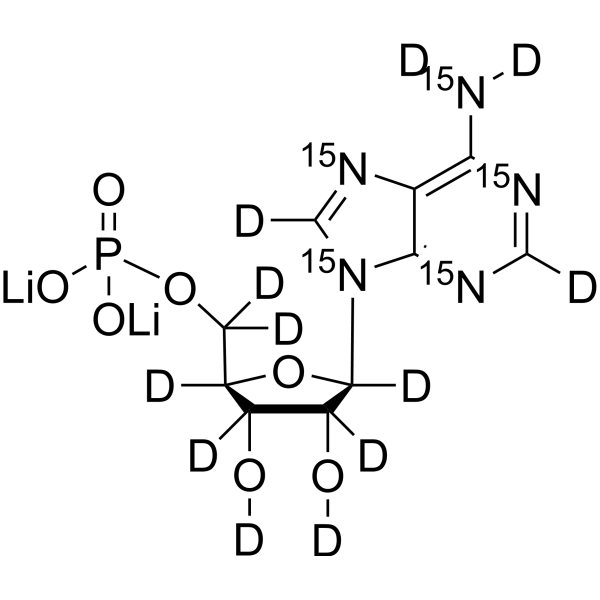 0 ImagesCat. No.: HY-A0181S5Purity: 99.50%Synonyms: AMP-15N5,d12 dilithiumAdenosine monophosphate-15N5,d12 (AMP-15N5,d12) dilithium is deuterium and 15N labeled Adenosine monophosphate (HY-A0181). Adenosine monophosphate is an adenosine A1 receptor agonist. Adenosine monophosphate has significant antiviral activity against HSV-1 and HSV-2. Adenosine monophosphate is a key cellular metabolite regulating energy homeostasis and signal transduction.
-
APNEA
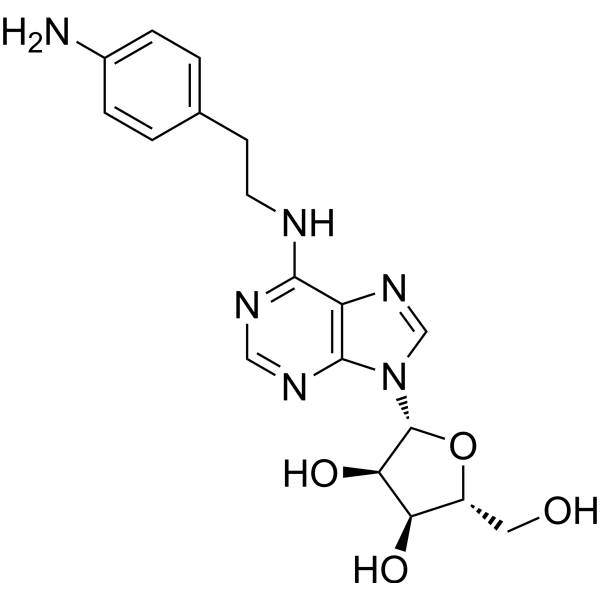 0 ImagesSynonyms: N6-[2-(4-Aminophenyl)ethyl]adenosineAPNEA (N6-[2-(4-Aminophenyl)ethyl]adenosine) is a potent, non-selective A3 adenosine receptor agonist.
-
2-Chloro-3-deazaadenosine
 0 ImagesCat. No.: HY-W777125CAS No.: 40656-71-12-Chloro-3-deazaadenosine is agonists for adenosine receptor, with Kis of 0.3, 0.08, 25.5 and 1.9 μM, for A1, A2A, A2B, and A3 receptors, respectively.
-
Istradefylline (Standard)
 0 ImagesSynonyms: KW-6002 (Standard)Istradefylline (Standard) is the analytical standard of Istradefylline. This product is intended for research and analytical applications. Istradefylline is a very potent, selective and orally active adenosine A2A receptor antagonist with Ki of 2.2 nM in experimental models of Parkinson's disease.
-
Pamabrom
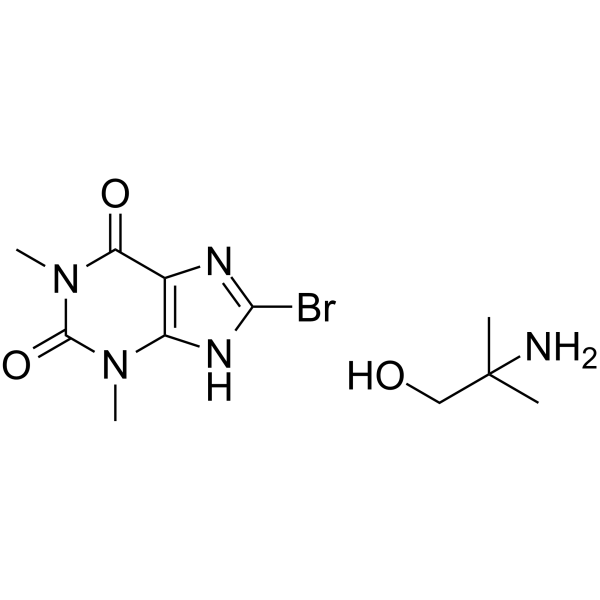 0 ImagesPamabrom is a diuretic that acts on the opioid receptor-nitric oxide (NO) -cyclic guanosine monophosphate (cGMP) -K+ channel pathway. Pamabrom exerts peripheral antinociceptive activity by activating this pathway. The mechanism involves activating opioid receptors, promoting the release of nitric oxide, and then influencing cyclic guanosine monophosphate and K channels to produce an analgesic effect. Pamabrom is orally active and is mainly used in the research and treatment of premenstrual syndrome and primary dysmenorrhea
[1].
-
MSX-2
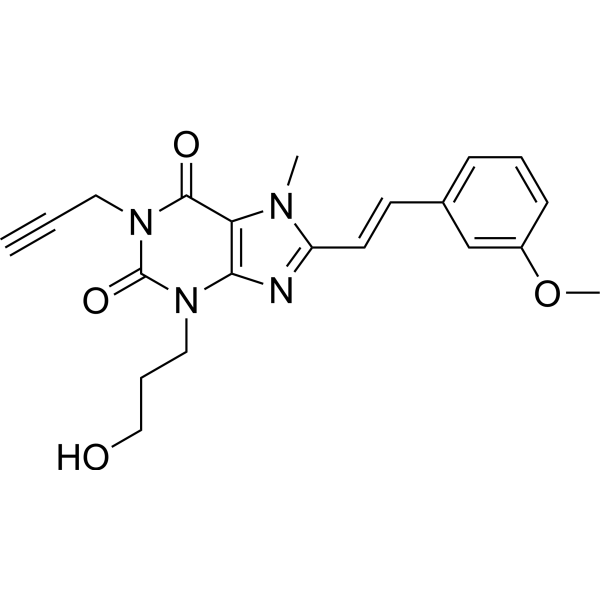 0 ImagesMSX-2 is A2A adenosine receptor antagonist, with Ki of 5 nM in human that plays an important role in Parkinson's disease.
-
Flavoxate hydrochloride (Standard)
 0 ImagesSynonyms: Rec-7-0040 (Standard); DW61 (Standard)Flavoxate (hydrochloride) (Standard) is the analytical standard of Flavoxate (hydrochloride). This product is intended for research and analytical applications. Flavoxate hydrochloride (Rec-7-0040; DW61) is an orally active L-type Ca2+ channel inhibitor and antispasmodic. Flavoxate hydrochloride inhibits cyclic adenosine monophosphate production by blocking voltage-dependent inward Ba2+ currents, regulating the brainstem micturition center, and stimulating G protein-coupled receptors. Consequently, Flavoxate hydrochloride induces relaxation of bladder smooth muscle and inhibits isovolumetric rhythmic contractions. Flavoxate hydrochloride effectively increases bladder capacity and alleviates symptoms of urgent urination frequency and pollakiuria caused by overactive bladder. Flavoxate hydrochloride can be used in research on overactive bladder and related voiding dysfunctions.
-
M1069 free base
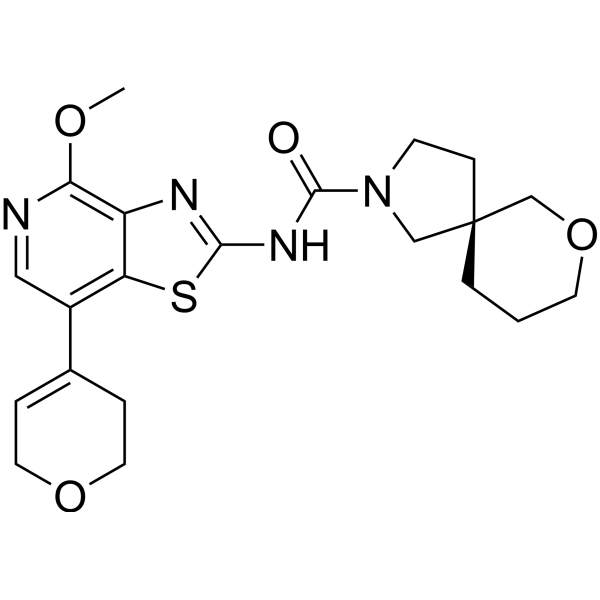 0 ImagesM1069 (free base) is a selective and orall active, dual A2A/A2B adenosine receptor antagonist with a selectivity of >100 fold against the A1 and A3 receptors. M1069 (free base) counteracts immune-suppressive mechanisms of adenosine, and exhibits anti-tumor activity.
-
A3AR antagonist 4
 0 ImagesA3AR antagonist 4 (Compd 1) is an A3AR antagonist, with Ki values of 30.8 nM (hA3) and 203 nM (hA1), repectively. A3AR antagonist 4 (Compd 1) can be used for the study of cerebral ischemia.
-
Theobromine (Standard)
 0 ImagesTheobromine (Standard) is the analytical standard of Theobromine. This product is intended for research and analytical applications. Theobromine is a methylxanthine found in cacao beans which can inhibit adenosine receptor A1 (AR1) signaling.
-
Inosine-13C
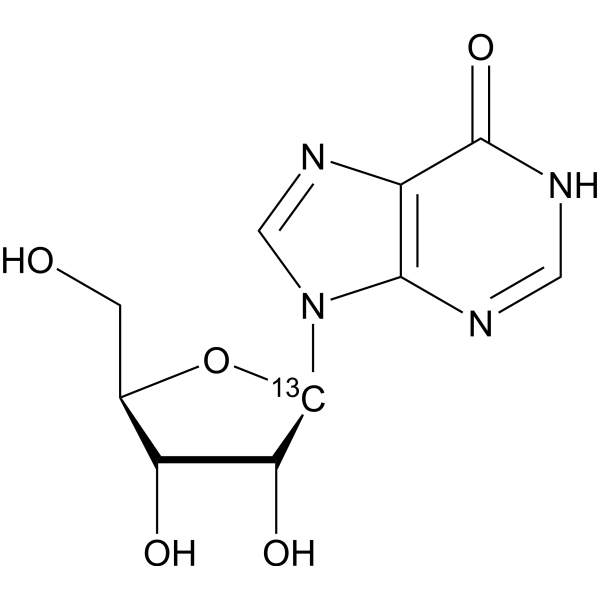 0 ImagesCat. No.: HY-N0092S1
-
Theophylline (sodium glycinate)
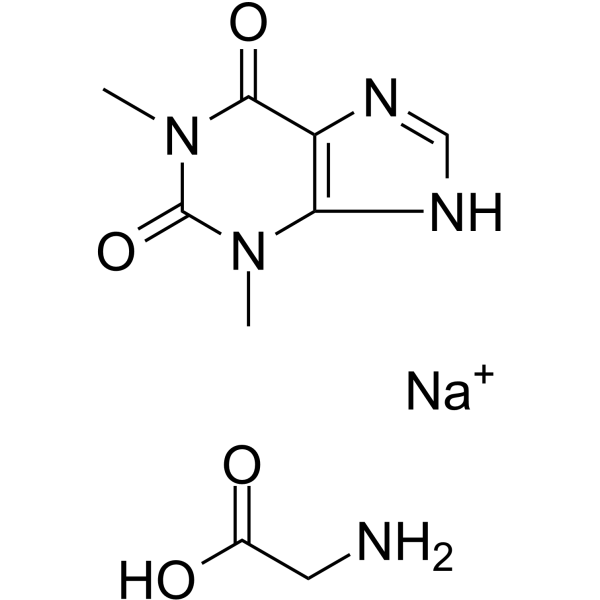 0 ImagesSynonyms: 1,3-Dimethylxanthine (sodium glycinate); Theo-24 (sodium glycinate)Theophylline (1,3-Dimethylxanthine) sodium glycinate is a potent phosphodiesterase (PDE) inhibitor, adenosine receptor antagonist, and histone deacetylase (HDAC) activator. Theophylline sodium glycinate inhibits PDE3 activity to relax airway smooth muscle. Theophylline sodium glycinate has anti-inflammatory activity by increase IL-10 and inhibit NF-κB into the nucleus. Theophylline sodium glycinate induces apoptosis. Theophylline sodium glycinate can be used for asthma and chronic obstructive pulmonary disease (COPD) research.
-
NBUMP
 0 ImagesCat. No.: HY-115525CAS No.: 1348755-27-0NBUMP is a 5-HT1A receptor ligand with a 5-HT1A receptor Ki of 0.1 nM, α1-adrenergic receptor Ki of 46 nM, and a 5-HT1A receptor-to-α1-adrenergic receptor selectivity ratio of 460.NBUMP binds to the 5-HT1A receptor with high affinity.NBUMP binds to the α1-adrenergic receptor with lower affinity.
-
INCB106385
 0 ImagesCat. No.: HY-184213CAS No.: 2408260-34-2INCB106385 is an orally active A2A/A2B adenosine receptor antagonist, with an IC50 value of 4.4 nM for cAMP inhibition at the A2A adenosine receptor and an IC50 value of 6.4 nM for cAMP inhibition at the A2B adenosine receptor. INCB106385 inhibits the pCREB signaling pathway in immune cells, blocks adenosine-mediated immunosuppression in the tumor microenvironment, and induces tumor regression. INCB106385 exhibits efficacy as a monotherapy or in combination with anti-PD-1 antibodies in colon cancer models. INCB106385 can be used for the research of colon cancer.
-
Theobromine-d6
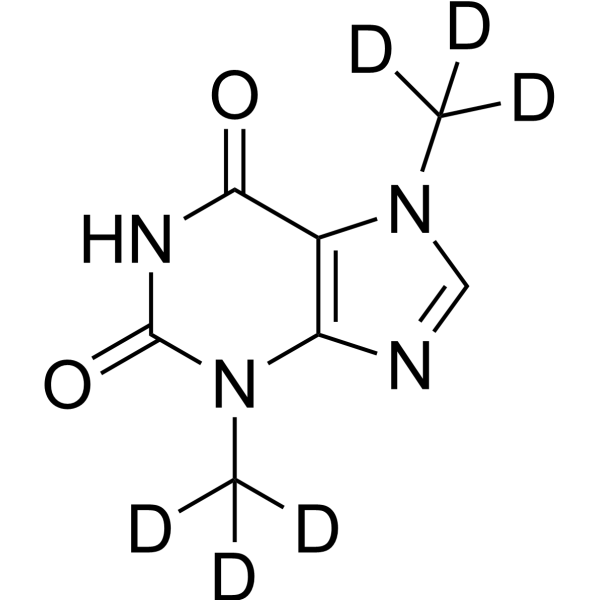 0 ImagesSynonyms: 3,7-Dimethylxanthine-d6Theobromine-d6 is the deuterium labeled Theobromine. Theobromine is a methylxanthine found in cacao beans which can inhibit adenosine receptor A1 (AR1) signaling.




